
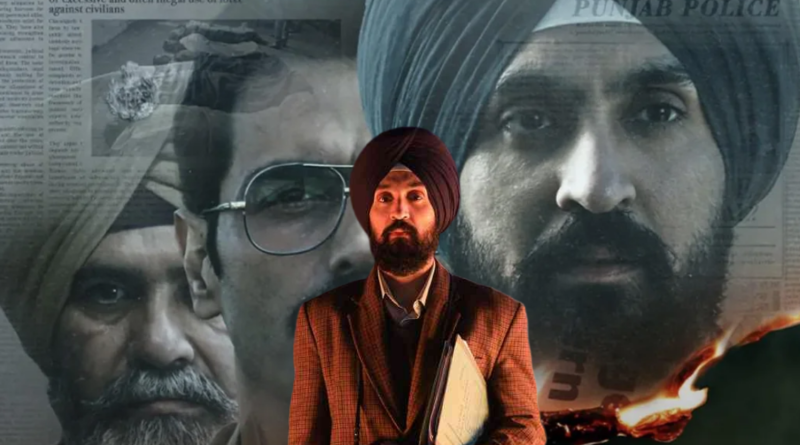
Satluj Controversy Explained: Why Diljit Dosanjh’s Film Was Pulled From ZEE5 India
Diljit Dosanjh’s long-delayed film Satluj has run into fresh trouble, this time on streaming. Barely two days after arriving on ZEE5, the drama was quietly removed from the platform’s Indian catalogue, even as it continues to stream for audiences abroad on ZEE5 Global.
The removal, announced on July 5, reopened a years-long saga that has trailed the project through certification disputes, courtroom appeals, a scrapped festival premiere, and three separate titles. For a film built around one of the most sensitive chapters in recent Punjab history, the sudden takedown was, to many observers, almost predictable. Here’s a clear breakdown of what happened, who the story is about, and why it matters.
What ZEE5 said
In a statement posted to Instagram, ZEE5 said the film would be unavailable in India until further notice, pointing only to “current developments” without offering a specific reason for the takedown. The platform thanked subscribers for the response the film had drawn and said it remained committed to bringing the title back through the proper channels.
Crucially, the streamer did not spell out what those “developments” were, nor did it name any order, complaint, or legal notice behind the decision. That silence has left the exact trigger for the removal unconfirmed and open to speculation. What is clear is that the film has not been pulled everywhere: viewers outside India can still watch it, in full and uncut, on ZEE5 Global. The result is an unusual split in which the same title is simultaneously championed abroad and withdrawn at home.
Who was Jaswant Singh Khalra?
To understand why Satluj is so charged, it helps to understand the man at its centre. Jaswant Singh Khalra was a human rights activist who, in the mid-1990s, set out to document what happened to thousands of people who reportedly disappeared during the state’s insurgency-era security crackdowns of the 1980s and early 1990s.
Working through official records, Khalra sought to establish that large numbers of bodies had been cremated by authorities and logged as unidentified, without their families ever being informed. His findings pointed to a pattern of secret disposals that, he argued, concealed extrajudicial killings. He took that evidence public and pressed for accountability, drawing national and international attention to a subject many would have preferred to keep buried.
Khalra himself disappeared in 1995. His case became a landmark in India’s human rights history. A decade later, in 2005, four Punjab Police personnel were convicted over his abduction and killing and handed seven-year sentences. In 2007, the Punjab and Haryana High Court enhanced those punishments to life imprisonment. It is this fight, a lone activist against a system determined to look away, that the film sets out to dramatise, with Dosanjh in the central role.
Three titles and one long fight for release
The project’s journey to audiences has been anything but smooth, and its shifting identity tells that story on its own. It began life as Ghallughara, a historic Punjabi term tied to the mass killings of Sikhs in 1746, 1762, and 1984.
When the makers approached India’s Central Board of Film Certification (CBFC) in late 2022, the review stretched across roughly six months. According to reports, the board cleared the film only with a substantial list of demanded changes and directed that the title be altered to Punjab ’95. Coverage of the dispute has cited a total running into more than a hundred cuts sought before the film could be certified for Indian screens — a scale of intervention that the makers found impossible to accept without gutting the story.
The producers challenged the certification order before the Bombay High Court. Around the same period, the film was withdrawn from a planned gala premiere at the 2023 Toronto International Film Festival, with a source telling Variety at the time that political considerations had played a part in that decision. A worldwide theatrical release once pencilled in for early 2025 never materialised either, leaving the finished film in limbo for years.
It finally reached audiences on July 3, 2026, as a digital release under its third and current title, Satluj. Director Honey Trehan explained the latest change plainly, telling Variety that the previous title could not be retained, so the film was renamed. He stressed that the streaming version was the complete film, without the cuts once demanded — the version, in his words, that the team had always intended audiences to see.
Uncut abroad, unavailable at home
That distinction, an uncut cut, released globally, is central to the current controversy. For three years, the sticking point in India had been the certification conditions attached to a theatrical release. Streaming offered a route around that impasse, and the makers used it to put out the film in what they describe as its original form.
The film was produced by RSVP and MacGuffin Pictures, with a cast that also includes Arjun Rampal, Kanwaljit Singh, Suvinder Vicky and Geetika Vidya Ohlyan alongside Dosanjh. Its arrival was initially framed by the platform and the team as a milestone: a difficult, purpose-driven story finally reaching viewers after a long wait. Within 48 hours, that milestone had become a fresh flashpoint, with the India takedown turning attention back to the very questions the film had spent years trying to escape.
How the makers responded
Both the director and his leading man have consistently framed Satluj as a passion project rather than a provocation. Trehan described it as a tribute to human resilience and said the aim had always been to tell the story honestly, sensitively and without compromise. Dosanjh, for his part, called portraying Khalra one of the most meaningful roles of his career, saying the script had moved him because it was rooted in the real struggles and sacrifices of ordinary people.
Ahead of the removal, Dosanjh had openly signalled that he expected the film’s window in India to be short and encouraged fans to watch it while it remained available. After the takedown, he said he was relieved the film had reached viewers at all and reiterated his solidarity with Punjab. Whatever the commercial setback, his public position has been that the story mattering to audiences was the point.
A wider censorship debate
The episode has quickly folded into a larger, ongoing conversation about creative freedom and censorship on Indian streaming platforms. Forbes noted that several other politically contentious titles remain freely available on the same platform, a contrast that has prompted some commentators to question how consistently such films are treated. Supporters of the film see the removal as a worrying signal about which stories can be told; others argue platforms are entitled to manage their catalogues as legal and regulatory circumstances evolve. This report takes no side on that dispute; both readings are currently in play in public commentary.
Where things stand now
For the moment, Satluj sits in an odd middle ground: off the shelves in India, still streaming abroad on ZEE5 Global, and once again at the centre of the free-expression debate that has followed it from the start. ZEE5 has said it will pursue due process to return the film to Indian audiences, but has not offered a timeline, and no formal explanation for the takedown has been made public.
Until that clarity arrives, the film’s status in India remains uncertain, a story about the difficulty of telling a story, still being written.
Reporting and quotes in this article are drawn from public statements by ZEE5, director Honey Trehan and actor Diljit Dosanjh, as carried by Variety, Forbes and other outlets.